Table of Contents
It indicates you can make new, much better options and stop falling into old behaviors. Research study reveals that ending up being mindful of psychological patterns is a core positive result of treatment. Therapy can't make every one of life's challenges vanish, yet it can help you start replying to challenging individuals or situations in much healthier, a lot more productive means.
Development in treatment is constantly a favorable indicator. It suggests you're improving and progressing, and it reaffirms that you're being supported where you are currently, not where you were when you started. Attaining your initial goals and establishing new ones with your specialist shows real energy in your healing journey.

Development in treatment is seldom, if ever, linear. This suggests points will not constantly occur in a straight line or in a predictable means. You might have setbacks, regressions, or challenging moments along the road, but it's crucial to bear in mind that these become part of the process, not an indication of failure.
Are you taking into consideration therapy but are unsure just how often you should go to sessions? Finding the ideal balance between therapy visits can be an essential consider your psychological wellness journey. In this article, we will explore the question: Just how typically should you go to therapy sessions? There is no one-size-fits-all solution to this question, as the relies on various elements.
Spotting Relationship Traits
At Deepness Counseling, we provide lasting psychodynamic psychotherapy. The majority of clinicians concur that participating in stands for the minimum level of immersion to see long-lasting impacts. The factor is simple: treatment is a technique. Much like meditation, yoga, exercise, writing, or any various other practice, it needs uniformity of immersion with a great deal of method to learn and internalize the technique.
This will equip you to choose that seem like your choices (not just adjustments to the needs of other individuals). As you discover to identify and navigate the intricacies of your internal globe through of treatment, you will find greater credibility and creativity in job and in your partnerships.
We urge you to speak with among our specialists to determine the ideal frequency for you. It is also vital to recognize that, in situations of economic challenge, many of our therapists can and will certainly fit a lower regularity of therapy. Our team believe that it is crucial to meet you where you are and to move at the pace you identify, as you get started on this extensive trip.
Many people most likely to therapy as soon as a week, and some might also go twice a week if they are taking care of severe distress or have extensive therapy goals. Nonetheless, as they progress, these sessions may become much less frequent. For those with less pushing problems who only attend therapy for ongoing upkeep, bi-weekly and regular monthly sessions are enough.
Building Balanced Inner Strength Moving Past Status
There isn't simply one factor determining the variety of times one need to most likely to therapy, however several factors that contribute in figuring out therapy regularity. These variables can be interior (personal battles, motivations, etc) and exterior (healing components). By comprehending these elements, you will certainly recognize why your therapist produces a certain routine and why that timetable is most suited to your healing trip.
In such instances, twice-weekly sessions might be needed. Fulfilling the therapist a lot more frequently in the beginning of treatment is usually advised. It could be on a regular or twice monthly basis, and the reason for this is easy: the much more you meet with the specialist, the quicker the therapeutic bond can be established.
Comprehensive Mental Health Methods
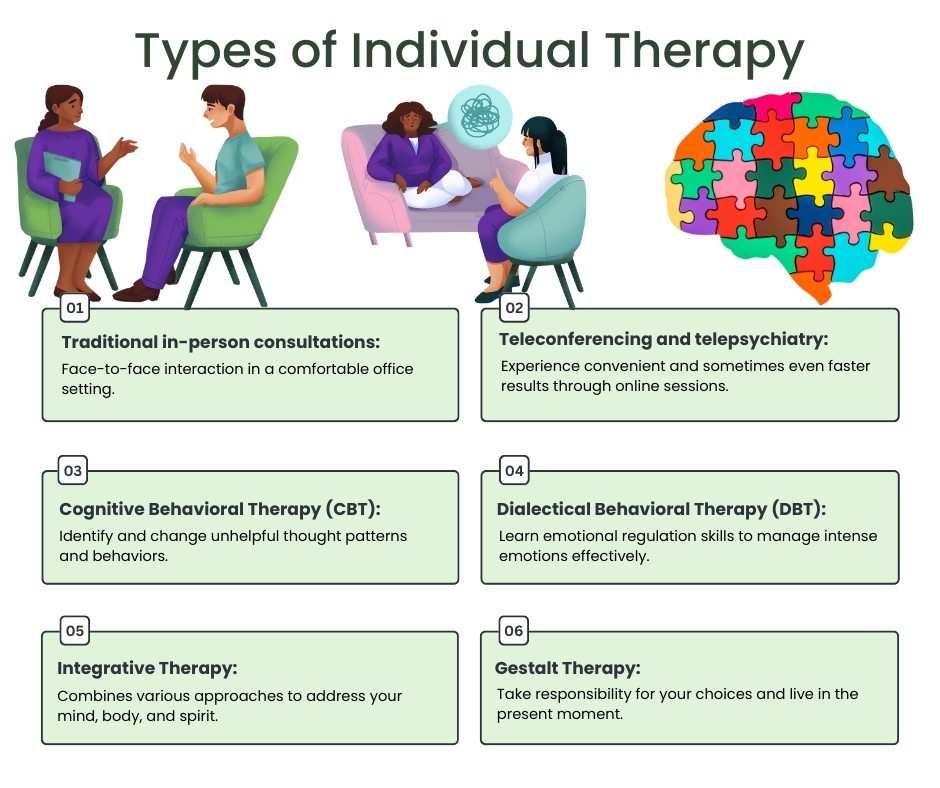
The regularity of treatment sessions also comes down to what treatments are being made use of. Various treatment methods have different session regularity suggestions since some can be extensive while others may not be. Psychoanalysis usually calls for multiple sessions a week, while psychodynamic therapy (what we give at Depth Therapy) could require simply once a week sessions.

Your spending plan, work schedule, individual availability, and the distance in between your home and the clinic need to all be gone over with your specialist. This is necessary for establishing a therapy routine that maintains you committed without adding any type of unnecessary stress and anxiety. No matter the mental health problem, going to weekly treatment sessions can be beneficial for all those that on a regular basis go to treatment.
Dedicating Time in Your Wellbeing
When therapy sessions are scheduled at a set interval, it allows you and the therapist to establish a stronger alliance, which, subsequently, produces better rely on less time. This produces a secure area where you can refine and review your experiences, ideas, and feelings with your specialist to ensure that they can acquire insight into your battles.
As you meet your therapist more regularly, the likelihood of problems going unaddressed, however little, is low. With consistent regular follow-ups, the therapist can evaluate the progress made and strengthen coping devices and new knowings regarded needed for producing long-term modifications. A therapistclient partnership is founded on trust, and without regular conferences, it can be difficult to build that depend on.
The Value of Clinical Care in Addressing Anxiety
When you feel recognized and unconditionally supported, you can share your ideas, sensations, and struggles without appointment. For intimate conversations to move openly, it is essential to have a conducive environment where personal expression is not suppressed by judgment. One means to produce such a safe area is to satisfy your specialist regularly to review your problems and locate resolutions while devoted to you.
It is a vital part of mental healthcare that can have a profound effect on an individual's total well-being. Determining will be required is a continuous procedure that might call for adjustments along the road. It is important to focus on indicators that show the need to raise or lower the.
Discuss your interest in your specialist and discover the opportunity of even more intensive treatment. If you locate on your own experiencing enhanced distress, heightened symptoms, or a worsening of your psychological health and wellness condition, it may suggest the requirement for even more regular treatment sessions. Communicate these adjustments to your specialist to ensure that they can adjust your therapy strategy accordingly.

Table of Contents
Latest Posts
It's Your Right To Have Help with Healing
Locating the Right Therapist for Depression, Anxiety, and Injury: A Testimonial of Individual and Couples Treatment Alternatives
Understanding the Pattern of Overextension and Collapse
Navigation
Latest Posts
It's Your Right To Have Help with Healing
Locating the Right Therapist for Depression, Anxiety, and Injury: A Testimonial of Individual and Couples Treatment Alternatives
Understanding the Pattern of Overextension and Collapse